What we build
Websites first. Then the systems that run the business.
Four things, explained plainly, with the work that proves we have done each one before. Technical detail is there if you want it, tucked behind a tab on each section.
01 · From $995, flat. You own it.
Websites
Most small business websites were built once, years ago, by whoever was cheapest at the time. The prices are wrong, the photos are stock, the reviews are buried, and it takes six seconds to load on a phone. That is the site most of our customers come to us with.
We rebuild it properly. We read everything on your current site first, so no page, phone number, form, or map gets lost. Then we build the new one around your real business, show it to you next to the old one, and launch it without your email going down. The build is one flat price, quoted in writing before we start. Hosting and unlimited edits are $50 a month, no contract. You own the whole thing.
Pricing, what is included, and the FAQ.
How a build runs, for the technical reader
Every build goes through the same eight stages, in order: probe the existing site, scrape every page and asset, audit the full link graph, build the replacement from one of nine named design systems adapted to the business, polish (image optimization to AVIF and WebP, self-hosted fonts, security and caching headers), prove parity against the original (every route, phone number, form, map, and social link), run an accessibility check against WCAG 2.2 AA, and deploy behind an access gate.
Output is static HTML served from Cloudflare's edge with structured data, a sitemap, and an llms.txt file, so search engines and AI assistants read the real page without running anything.
What you get
- A multi-page website with your real photos, your real reviews, and your services, built to look like your business and nobody else's
- A side-by-side comparison with your current site before anything goes live, so you can see nothing was lost
- Fast on a phone, easy for Google and AI assistants to find, and checked so everyone can use it
- A private preview link, plus a short, honest list of what we noticed on your current site
- 01 read
- everything on your current site
- 02 save
- every page, photo, and phone number
- 03 list
- what must carry over
- 04 build
- the new site, around your business
- 05 speed
- fast on a phone
- 06 check
- nothing lost, everyone can use it
- 07 preview
- you see it before anyone else
- 08 launch
- email keeps working
02 · Every customer, quote, and follow-up in one place
Customer relationship management (CRM) systems
A lead should never live in someone's head or a text thread. When a customer calls back, the person who answers should be able to see the whole history in one place. That is what a customer relationship management system does, and it is where most small businesses lose the most money without noticing.
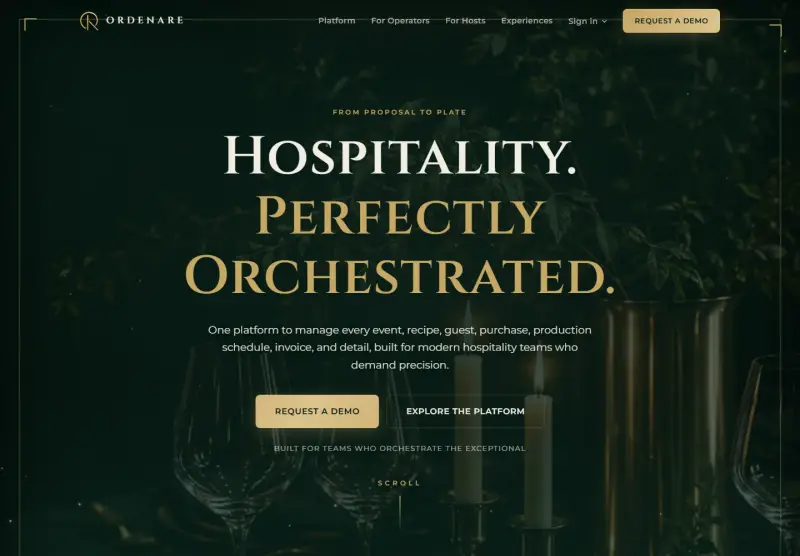
We have built these at full scale. Ordenare is an event and catering management platform we built for the hospitality industry and still run: leads, proposals, e-signatures, menus, payments, and guest portals, from first inquiry to paid invoice. For a smaller business the system is smaller, but the idea is the same. It is shaped around how your team already works, not the other way around.
What one looks like
- One screen per customer: every call, quote, email, and payment, in order
- A pipeline you can see at a glance: who is new, who is waiting on you, who is ready to pay
- Follow-ups that happen on time because the system reminds the right person
- Reports that tell you where leads come from and where they stall
03 · Your numbers on one screen
Reporting dashboards
Most owners know how the business is doing by feel, and find out for sure at tax time. The numbers exist, they are just spread across a point-of-sale system, a bank, a booking tool, and a spreadsheet somebody updates when they remember.
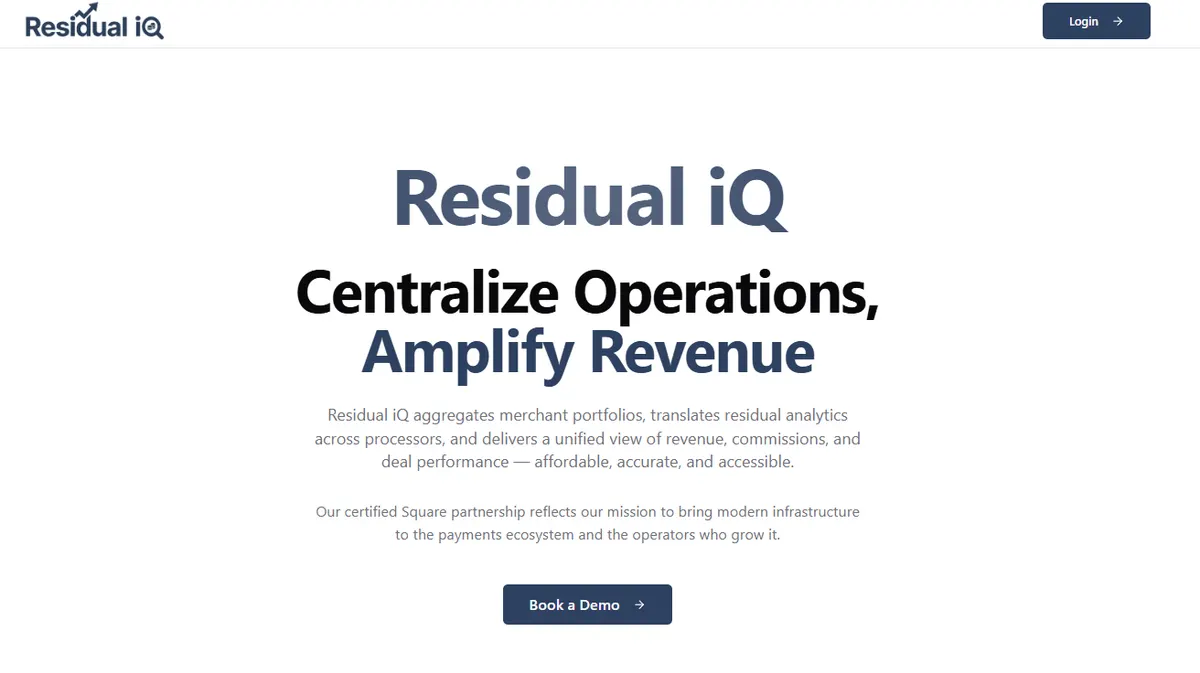
A reporting dashboard pulls those together and keeps them current without anyone doing it by hand. We built Residual iQ for payment professionals who manage portfolios of accounts and needed one place to see all of it. Every website we host also comes with a smaller version of the same idea: a live dashboard of who visited and what they did, and a monthly report in plain English.
What one looks like
- Sales, costs, and performance pulled from the tools you already use, updated on their own
- One screen you can open on your phone instead of five spreadsheets
- Trends you can actually see: this month against last, this location against that one
- A plain-English summary emailed to you on a schedule
04 · The busywork, handled before you get in
AI assistants
Every business has work that has to happen but does not need a person's judgment: reading what came in overnight, sorting it, pulling the right information together, writing the first version of a reply, moving a record from one system into another. That work is where mornings go.
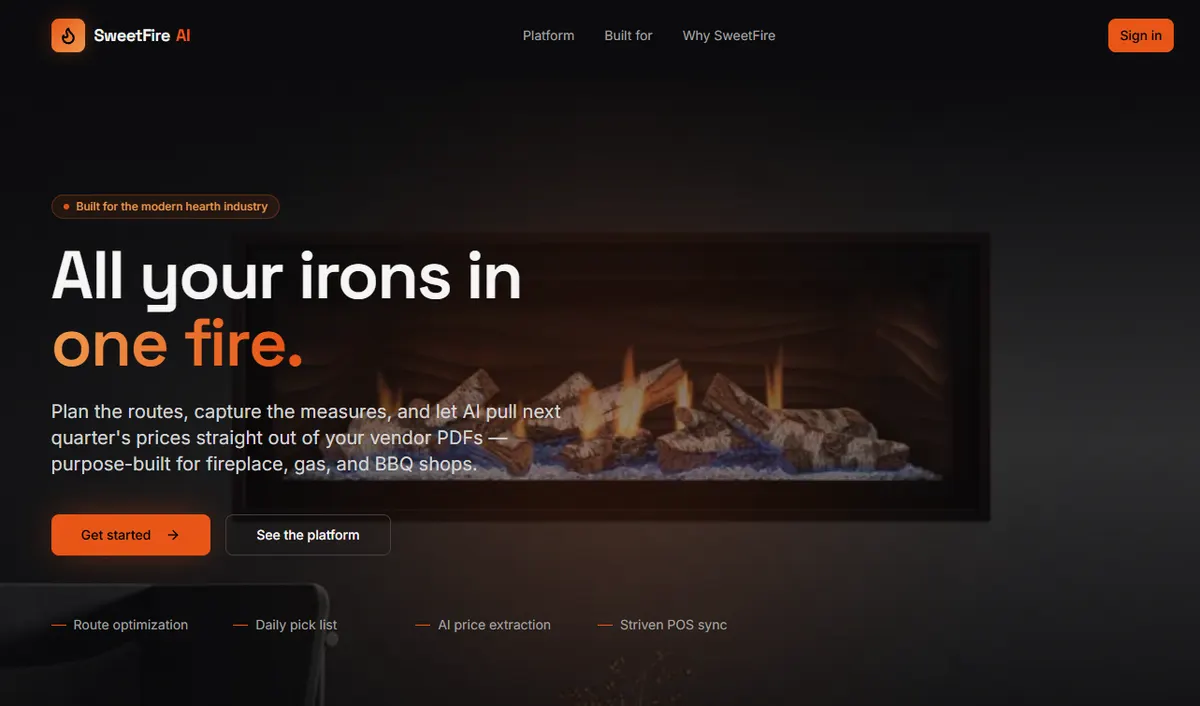
AI assistants do it on a schedule. What keeps it safe is the boundary: the assistant prepares, a person decides. Anything that reaches a customer waits for approval, and every run leaves a record of what it touched. We built SweetFire AI for a distribution business that was drowning in supplier price sheets. It reads them, researches products, and keeps the catalog current, and a person signs off before anything changes.
What you get
- Overnight messages read, sorted, and turned into a draft reply someone on your team approves
- Information kept in sync across the tools you already use, without anyone retyping it
- Something watching your website, your inbox, or your systems that raises a flag before a customer notices a problem
- A log of everything the assistant did and why
05 · Two scores, in plain English, by email
The free website report card
Before you spend a dollar with us, you can find out exactly where your current website stands. Put your address in on the Websites page and we send you a report card.
It grades two things a business owner actually cares about. First, how well the site turns a visitor into a customer: where the reviews sit, whether a phone number is reachable from every page, how it reads on a phone, whether the design signals a business that is doing well. Second, whether Google and AI assistants can find, understand, and recommend you. We hold our own site to the same two scores.
For the technical reader
Internally the two scores are the Conversion Opportunity Score (COS) and the Digital Entity Optimization score (DEO). The engine crawls several pages, not just the homepage, judges what it sees with a vision model against industry profiles so a plumber is never penalized for lacking features a plumber does not need, and checks structured data, crawlability, an llms.txt file, name and address consistency, and whether the service copy is specific enough to answer a question.
What you get
- A score for how well your current site turns visitors into customers, and what is costing you
- A score for whether Google and AI assistants can find and recommend you, and what is missing
- Written so it informs rather than insults. We never trash the site you have.
- Delivered by email in minutes, no sales call attached
- turning visitors into customers
- 72 / 100
- what is costing you
- reviews buried · no tap-to-call on mobile · dated design
- found by Google and AI
- 31 / 100
- what is missing
- business details Google can read · thin service descriptions
- pages checked
- 9
- phone number reachable
- on 2 of 9 pages
- delivered
- by email, in minutes
06 · The most common way a new website hurts a business
A launch that keeps your email working
The most common way a website launch hurts a business has nothing to do with the website. Somebody edits the domain settings by hand, gets one line wrong, and the inbox stops receiving mail for two days. Customers assume you are ignoring them.
We took the hand out of it. Before your new site goes live, we copy every one of your domain's settings, read them back, and compare the email settings against the original. If anything does not match, the launch stops. There is no guesswork in that step and no AI either, on purpose. Same input, same result, every time.
For the technical reader
The go-live process snapshots the domain's full DNS, replicates it into a Cloudflare zone, adds SPF and DMARC baselines where missing, then diffs MX, SPF, and DKIM against the originals. A mismatch is a hard stop. The client's only action is a nameserver change at the registrar, which is reversible.
What you get
- A complete copy of your domain's current settings, saved before anything changes
- Your email settings copied exactly and checked against the original before the switch
- One step on your side: paste two lines at the company you bought your domain from. If anything looks wrong, paste the old ones back.
- Nothing goes live until the check passes
- settings saved
- 14 records
- copied
- 14 of 14
- email routing
- match
- email protections
- match
- check
- PASS
- your step
- paste 2 lines · reversible
07 · Included with every website we host
See who is visiting
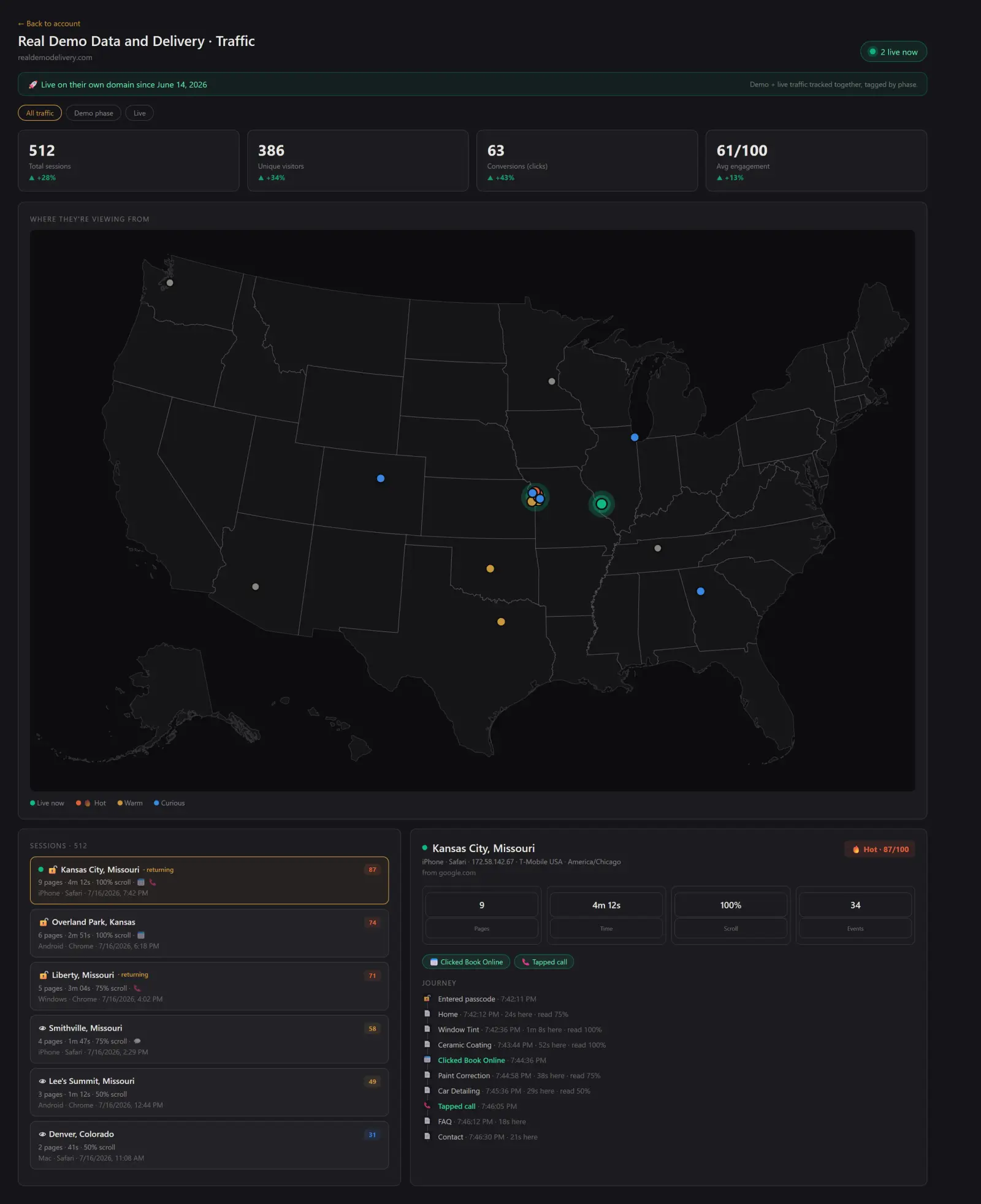
Most analytics tools are blocked by a third of browsers, slow your site down, and still cannot tell you whether anyone called. Every site we host comes with our own visitor dashboard instead. It shows you who came, what they looked at, what they tapped, and how fast the page was for them.
It also shows you something nobody else does: when Google and the AI assistants come to read your site. That is how you know the work to get found is working. No ad trackers, no following people around the internet, and the privacy policy says exactly what the code does.
What you get
- Who visited, what they read, and what they tapped: calls, texts, bookings, form sends
- How fast the site really loaded for real visitors, on their phones
- Which search engines and AI assistants came by, which is how you know the work to be found is landing
- A monthly report in plain English, emailed
08 · We test things on our own sites before yours
Our research lab
Advice about websites changes every month and most of it is folklore. We keep a small research lab where we try a practice on our own sites first, measure whether it actually helped, and only then write it into the standard every client site is built and checked against.
It is also where we hold ourselves accountable. This website is built to the same standard we sell, and anyone can check it from the outside.
How to verify this site yourself
Fetch any page with JavaScript off and the copy is in the HTML. Read /llms.txt and /llms-full.txt. View source for the Organization, WebSite, WebPage, Breadcrumb, and FAQ structured data. Unknown URLs return a real HTTP 404. The www host redirects to the apex with a 301. HTML is never cached, hashed assets are immutable for a year, and HSTS is set. Core Web Vitals are reported by this page's own beacon, and search and AI crawler visits are logged at the edge.
What it means for you
- Nothing changes on your site because somebody read a blog post
- Every website is built and checked against a written standard, and the standard is public
- Your site is re-checked regularly, and we fix what drifts
- The research is published, so you can read what we base decisions on
- the standard
- version 1.0 · six areas · every build checked against it
- research
- 5 articles published
- checks
- every hosted site, regularly
- measured against
- Google Search Console and real visitor data
- policy
- test it, prove it, then use it
Also
Other things people ask us for.
Fifteen-plus years of running operations means we get asked about more than websites. These are the common ones.
Point-of-sale and payments
Authorized reseller for SpotOn, Square, and Clover. We set up the register, the card processing, and the online ordering so they match how you actually operate.
Connecting the tools you already use
Your booking system, your accounting software, your email, your website. We make them talk to each other so nobody retypes anything.
Custom software
Ordering portals, staff schedulers, customer portals, internal tools. Built around how your business runs, not the other way around.
Google Business Profile and local presence
Your listing, your reviews, your business email, and the details that make you show up when someone nearby searches.
Straight advice on technology
Which tools to keep, which to drop, and what you are paying for that is not serving the business. We do not sell what we recommend, so the advice is independent.
A look at how the operation runs
Where the time goes, where the money leaks, and which three things would change the most. Written up plainly, with numbers.
Websites are priced flat on the Websites page. Customer systems, dashboards, AI assistants, and custom software start with a conversation and get their own written quote.
Behind you.
Want this behind your business?
Start with the free report card, or book thirty minutes and tell us what is slowing you down.
Or start with the free website report card. A real person answers either way, usually the founder.